Fastening is the least glamorous step and the one that fails most quietly: inconsistent torque, missed screws, stripped threads — all of which end up as rework and customer complaints. Automating it takes repetitive labour off people: consistent torque, stable cycle time, and missed screws that can be detected.
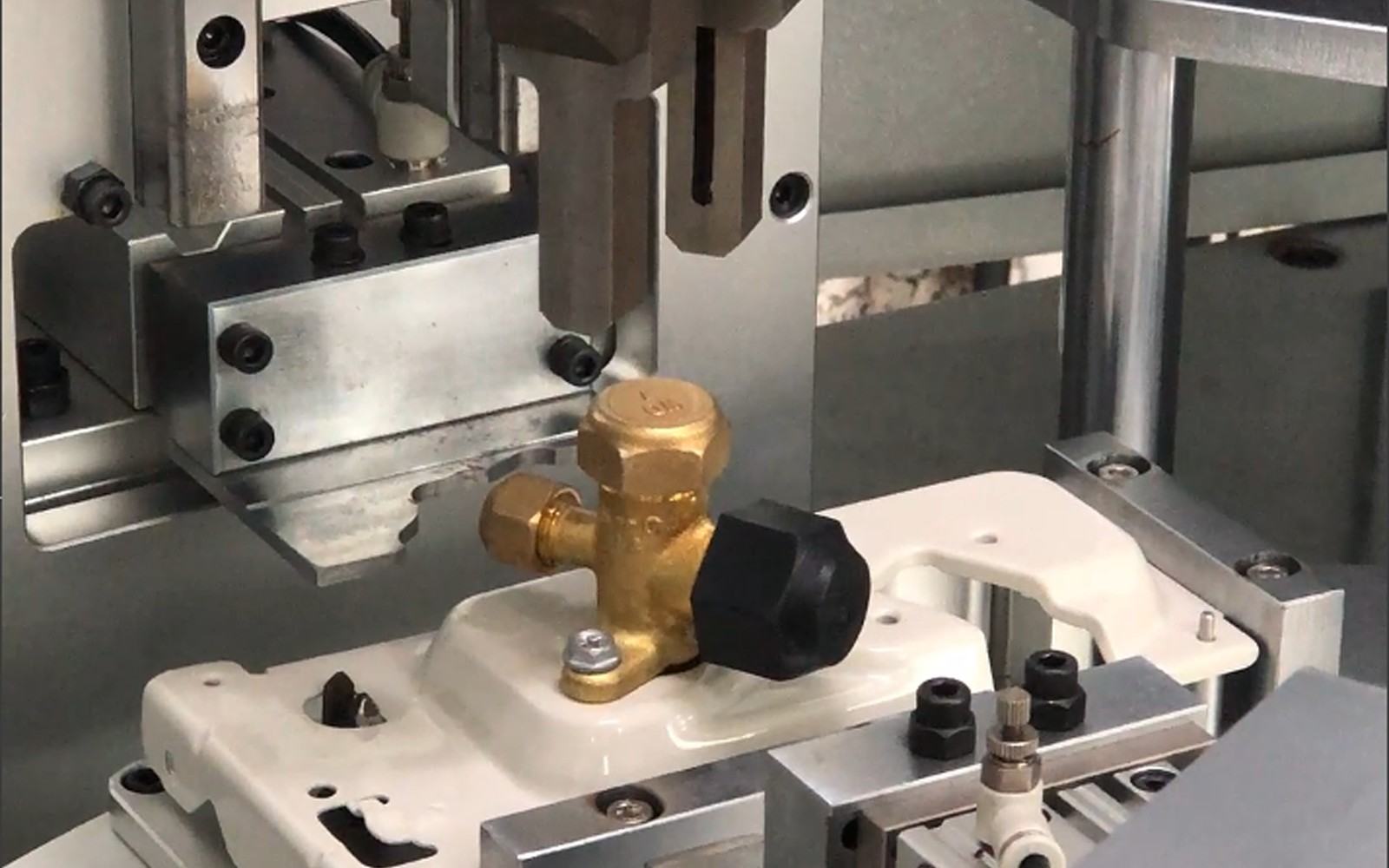 Running on a customer site
WHY AUTOMATE SCREWING
Screw driving has a clear profile: highly repetitive, high volume, sensitive to consistency, but structurally uncomplicated. That is why it is usually the lowest-investment, fastest-return automation step — fix this first and both cycle time and rework rate move.
| Item | By hand | By machine |
|---|---|---|
| Torque | Follows the operator's strength | Held to the set torque |
| Missed screws | Relies on self-checking, some escape | Detected and alarmed |
| Cycle time | Varies with skill | Fixed |
| Staffing | Tedious, high turnover | One operator supervises the machine |
| Capacity | More people, more cost | More machines, more output |
SPEC & CONFIGURATION
Output, cycle time and dimensions depend on your part, so we don't publish estimates. Firm figures are quoted at proposal stage against your actual workpiece.
| Parts | Small appliances, flask lids, hardware, electrical fittings |
| Station form | Multi-station rotary dial; number of stations to suit the part |
| Feeding | Vibratory bowl feeder, automatic screw delivery available |
| Loading | Manual, or robot pick-and-place |
| Control | PLC + touchscreen, recipes stored |
| Detection | Abnormal torque, missed screw, screw shortage alarm (configured as needed) |
| Customisation | Non-standard build to your product structure |
| Output / cycle / footprint | Calibrated to the part and station count; firm figures at proposal stage |
DELIVERY & ACCEPTANCE
01
Part dimensions, target output, existing process and site conditions are agreed before the machine is configured.
02
You test with your own parts and approve cycle time and finished quality before shipment.
03
We install, tune the parameters, and run it until it produces steadily.
04
Operator and maintenance training; long-term technical support, on site when needed.
RELATED EQUIPMENT
FAQ
These are the questions that actually come up on calls and on site. Answers describe how we really work, including what we can't do.
This is the right question to ask. Human fastening leaves no record; a machine can stop a miss. Torque curve, drive depth and seating signal must all agree before a screw counts as good; if they don't, it alarms and stops instead of quietly moving on. So the machine isn't selling speed — it's selling proof that nothing was missed.
Yes, but the difficulty with small screws isn't driving, it's feeding and holding. Below M1.5, blow feeding tends to flip the screw, so vacuum pick is usual; the nozzle bore has to match the head type. One cost to plan for: on small screws the driver bit is a consumable, and on two shifts a bit every two or three days is normal. That's an operating cost, not a fault.
Within a family, changing model (small coordinate shift) is ten minutes of programming. Changing to a completely different product means new fixture and nozzle, half a day to a day. That's why I ask how often you change lines per month: frequent changeover means quick-release fixtures and multiple stored programs; infrequent changeover means a fixed fixture, which is both cheaper and more rigid.
It depends on how many screws per part and how many seconds you allow. Few screws at fixed spacing: multi-spindle simultaneous driving is fastest. Many screws at known coordinates: an XY table driving point by point is cheaper. Scattered screws on several faces: a robot. Driving too many at once can bow thin parts; driving too few won't make cycle time. Send the screw layout and I'll lay out the stations.
Three numbers decide it: screws per part, number of stations, and whether you want fastening verification and data. Multi-spindle, XY and robot solutions differ a lot. Give me the screw spec and the layout and I'll quote a range against a proposal, not a bare machine price.
Driver bits, nozzles and feed tubes are normal wear parts, stocked to your spec so you don't wait. Bits are cheap but changed often, so I'll calculate a year's usage against your shift pattern — better that than a line stopped over a one-dollar bit.
Yes. Send parts and screws, 50 of each or more. You get back a fastening record: torque curves, pass rate, jam count. Those three numbers are worth more than any spec sheet.
On an XY machine, changing the program takes ten minutes; on a multi-spindle machine a model change is mostly a fixture change. We train until your own people can change programs and fixtures, not until you depend on remote support.
GET IN TOUCH
Send the product type, part dimensions, target output and your current process. We come back with cycle time and layout thinking first, then a proposal and price range.
Replies within one business day.