Riveting is heavy, repetitive work that still has to be consistent: under-set and the joint loosens, over-set and the head cracks. Automatic riveting fixes pressure and stroke, runs several stations in sequence, and one operator can watch several machines.
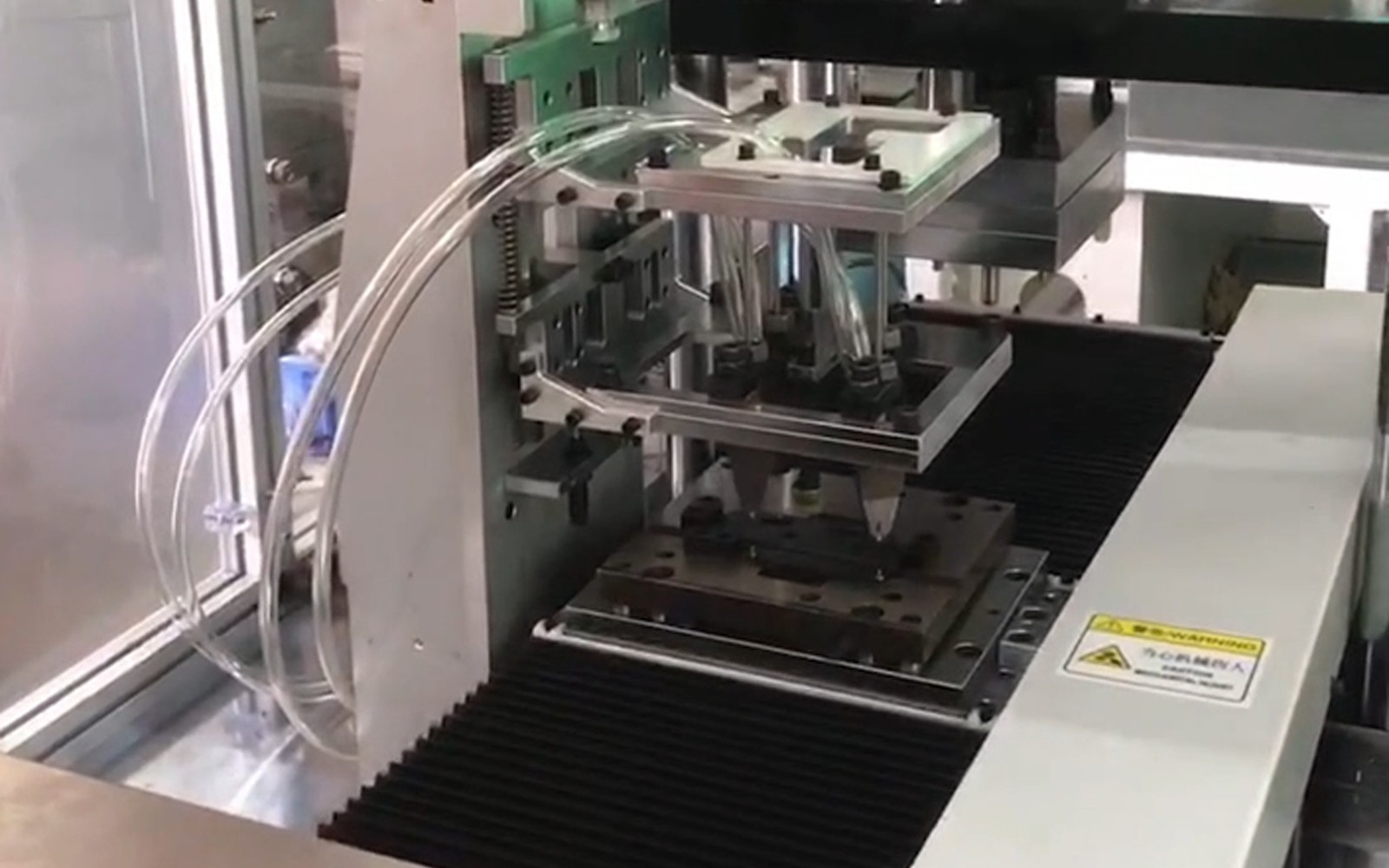 Running on a customer site
WHY AUTOMATE RIVETING
Rivet quality depends on pressure and stroke, and people cannot hold either constant across a shift — the last hour before break is not the first hour after it. The machine locks those two variables as parameters. Once the rivet is stable, the inspection burden downstream drops with it.
| Item | By hand | By machine |
|---|---|---|
| Pressure / stroke | Follows strength and fatigue | Fixed parameters |
| Cycle time | Unstable | Fixed |
| Consistency | Varies between batches | Consistent within and across batches |
| Physical load | High, operators tire | One operator per several machines |
| Batch orders | Capacity limited by staff | Capacity predictable |
SPEC & CONFIGURATION
Output, cycle time and dimensions depend on your part, so we don't publish estimates. Firm figures are quoted at proposal stage against your actual workpiece.
| Parts | Batch riveting of small appliances, hardware, electrical fittings |
| Station form | 3 / 4 / 5 stations, chosen by part and cycle time |
| Operation | Fully automatic continuous running, parts index through the stations |
| Loading | Manual, or automatic loading where required |
| Control | PLC + touchscreen, parameters stored and recalled |
| Actuation | Pneumatic or hydraulic, per the riveting process |
| Customisation | Non-standard build to your product structure |
| Output / cycle / footprint | Calibrated to the part and station count; firm figures at proposal stage |
DELIVERY & ACCEPTANCE
01
Part dimensions, target output, existing process and site conditions are agreed before the machine is configured.
02
You test with your own parts and approve cycle time and finished quality before shipment.
03
We install, tune the parameters, and run it until it produces steadily.
04
Operator and maintenance training; long-term technical support, on site when needed.
RELATED EQUIPMENT
FAQ
These are the questions that actually come up on calls and on site. Answers describe how we really work, including what we can't do.
A loose rivet (under-set) is insufficient stroke or insufficient pressure — not luck. We fix the stroke first and use pressure only for fine adjustment, and the pair is locked in a recipe. Change the rivet specification and we re-trial; we never carry the previous setting over. In production we check every 30 pieces for head cracking, single-sided set and die marking, and pull-test on a sample.
It can, which is why the lower die is contoured to the part. The support face is machined to the part profile, radiused and polished, and anything touching a visible face gets polyurethane or a nylon die. Thin panels are set with low pressure in several steps rather than one full stroke. Show me the part and the die gets made to it.
Yes, but pull riveting and press riveting are not the same machine. A pull rivet forms by breaking its mandrel, so the tooling is a nose assembly or a pull module. Press riveting forms by squeezing between punch and die. Force and stroke differ completely, and one machine does one of them. If you use blind rivets, I quote a pull-riveting solution — I won't try to convert a press.
It depends on station count, number of rivets and whether the part is flipped. One station sets one rivet per stroke; with three, four or five stations they run in sequence, so cycle time is station count divided by set time. Tell me rivets per part and the cycle you need and I'll work out the stations — a bare "pieces per minute" figure is meaningless because it changes with the next product.
Driven by station count, rivet specification and whether feeding is automatic. The difference between three and five stations, and between manual and bowl feeding, sits in the stations and the feed mechanism. Send rivet spec, rivets per part and target cycle, and I'll quote a range against a proposal.
The set head is a wear part, and once it wears the set is out of spec — so the head is checked for flatness at the start of every shift and replaced when it chips. Replacing a set head is neither expensive nor complicated, but the tooling is made to your rivet head shape, so keep a spare set on the shelf.
Yes. Send parts and rivets, a batch of each. You get back photographs of the set, pull-test data, and a note on die marking — which matters especially for visible parts.
Simpler than polishing. The operator loads, unloads and watches the set head. The difficult part is first-off setting, and we do that and store it as a recipe, so your people just recall it for the next part.
GET IN TOUCH
Send the product type, part dimensions, target output and your current process. We come back with cycle time and layout thinking first, then a proposal and price range.
Replies within one business day.