From forming and die cutting through card feeding, hot pressing, high-frequency sealing, barcode inspection and unload with dust removal — the whole line is sequenced and runs to one cycle. This is our reference turnkey product: the process framework stays the same, the details are built to your product.
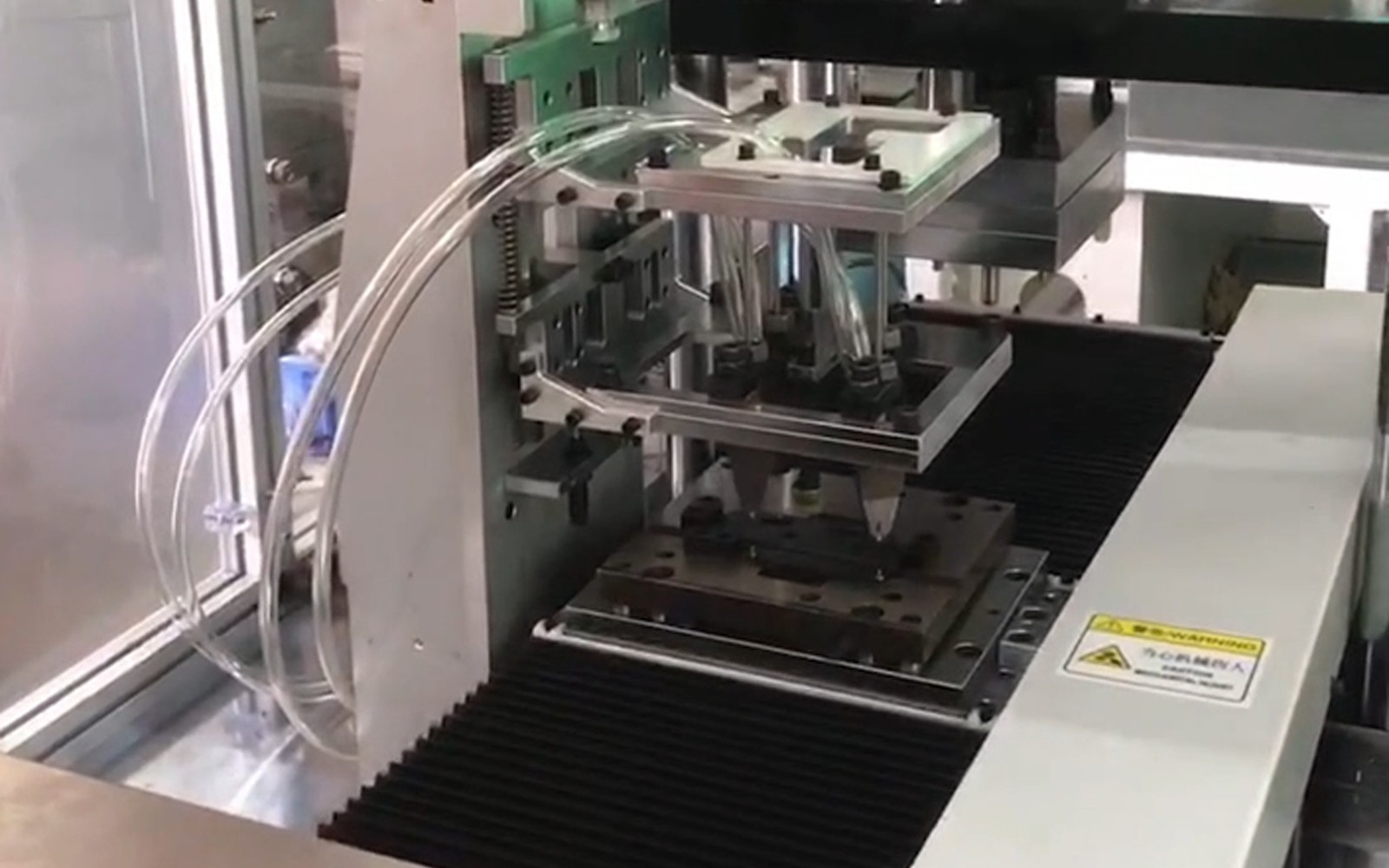 Running on a customer site
WHY TURNKEY
Packaging is the last step before the product ships and the easiest one to bottleneck: manual loading sets the pace of the whole line, and sealing temperature and pressure decide appearance and seal integrity. Turnkey means every station is designed and commissioned to the same cycle — instead of a row of machines waiting on each other.
| Item | By hand | By machine |
|---|---|---|
| Cycle time | Set by hand speed | One cycle across the line |
| Consistency | Seal appearance varies | Temperature and pressure fixed |
| Labour | Grows linearly with output | Fixed crew watching the line |
| Data | Written by hand | Marked, inspected, traceable |
| Scaling | More people, more floor | Adjust the cycle or add stations |
SPEC & CONFIGURATION
Output, cycle time and dimensions depend on your part, so we don't publish estimates. Firm figures are quoted at proposal stage against your actual workpiece.
| Products | Blister-packed goods: toys, hardware, household items, small appliance parts |
| Process | Forming, die cutting, loading, card feed, hot pressing, high-frequency sealing, barcode inspection, unload and dust removal |
| Line size | Custom to product and building conditions |
| Inspection | Laser marking / barcode inspection / CCD, configured as required |
| Control | PLC + touchscreen, recipes stored per product |
| Crew | Set by station count and automation level, agreed at proposal stage |
| Scope of delivery | Planning / layout / equipment / installation / commissioning / training / after-sales |
| Output / cycle / footprint | Calibrated to product and blister design; firm figures at proposal stage |
DELIVERY & ACCEPTANCE
01
Part dimensions, target output, existing process and site conditions are agreed before the machine is configured.
02
You test with your own parts and approve cycle time and finished quality before shipment.
03
We install, tune the parameters, and run it until it produces steadily.
04
Operator and maintenance training; long-term technical support, on site when needed.
FAQ
These are the questions that actually come up on calls and on site. Answers describe how we really work, including what we can't do.
Not just equipment. How forming, die cutting, stacking, carding and inspection connect; where the line sits; how the cycle is balanced; where people stand to take parts off — all of that is drawn. We install, commission and train on site, and we only leave once it produces steadily.
Work out changeover cost first. A line suits one or a few specifications running for a long stretch; if you change the mould every three days, changeover eats the efficiency a line is supposed to give you. In our experience the order volume must at least sustain a mould change once a week — if it can't, start with a single machine or a semi-automatic station rather than forcing a full line.
It depends on station count and product size. A configuration we have built runs 18 stations on a blister 190 × 110 × 93 mm at roughly 700 pieces per hour. Give me your output target and I'll work back through station count and cycle time — the same line running a different product or size will produce a different number, so one figure on its own means nothing.
Against what your customer demands. Appearance (whitening, flow marks, uneven wall, offset), dimensions and seal strength have to be agreed first — the quality standard is the precondition for planning the line. Until the standard is settled, station count and cycle time can't be pinned down. The inspection method follows the cost of a defect: cheap to scrap, sample by hand; expensive, add vision or inline inspection.
Blister packaging lines for toys, household goods, hardware and food, including deliveries to overseas factories. Specific customers and site conditions don't belong on a public page — we can talk in person, or I can send you line video, which beats reading text.
Driven by station count, cycle time and whether you need inspection and cartoning; the spread is wide — a semi-automatic line and a fully automatic line are different orders of magnitude. Send product size, target output and your current process and I'll come back with a concept and a price range before we get into detail.
Yes. We have video of lines in production, and sites we can take you to (with notice, out of courtesy to the customer). Blister lines only show half of themselves in video — it's better to watch one running.
Daily checks and cleaning are done by your operators; we supply the check sheet. Mould changes, air circuit and temperature control faults we support remotely or on site. A line has many parts, so maintenance responsibilities get itemised at acceptance — one by one, in writing.
GET IN TOUCH
Send the product type, part dimensions, target output and your current process. We come back with cycle time and layout thinking first, then a proposal and price range.
Replies within one business day.